
Abstract
Rare diseases (RDs) are conditions affecting fewer than 1 in 2,000 individuals in the general population. Despite their low individual prevalence, their collective impact poses significant challenges to healthcare systems worldwide. Several factors, such as limited patient numbers, fragmented data collection, and high genotypic and phenotypic heterogeneity, contribute to diagnostic delays. These challenges also hinder research and the development of effective therapeutics, leading to significant clinical, economic, and societal burdens
Biobanks, organized collections of biological samples and their associated data, are essential in addressing these challenges. In this review, we explored key aspects of biobanking for RDs, including operational, ethical, and legal considerations. The need for standardized frameworks and the importance of international collaboration through biobanking networks have been discussed. Future directions, including the integration of artificial intelligence, the implementation of dynamic consent models, and the adoption of decentralized data-sharing approaches, have also been highlighted. We also summarized the functions of biobanks in RD research, including their impact on identifying genetic variants, understanding disease mechanisms, discovering diagnostic markers, and creating personalized therapeutic approaches. By storing high-quality biospecimens and data collected in adherence with ethical and legal requirements, biobanks have been transforming the landscape of diagnosis and treatment, ultimately improving patient outcomes and fostering innovation in precision medicine for RDs.
Keywords: Biobank, Biobanking, Rare Diseases
INTRODUCTION
Rare diseases (RD) have the unique characteristic of affecting a limited percentage of the population, typically fewer than 1 in 2,000 individuals in a given region. They are also defined as “orphan diseases”, since they are neglected conditions with little or no funding or research for treatments due to the high cost of developing them for a limited patient population., Nonetheless, since there are collectively between 5,000 and 8,000 diagnosable RDs, they have a significant impact on patients, families, and healthcare systems. These diseases pose diagnostic challenges due to their low prevalence and clinical heterogeneity. As a consequence, patients often experience delayed diagnosis and increased hospitalization. Moreover, these conditions lead to diverse medical, economic, and psychosocial complications.- A national survey in Türkiye highlighted key challenges, including limited interdisciplinary cooperation, cost-related obstacles to testing, inadequate insurance coverage, and small patient groups, which impact the validity of the studies. Additionally, limited public and private support, as well as low levels of awareness among healthcare providers regarding the conduct of RD research, complicate these challenges.
Biobanks are organized facilities that collect, process, and store biological samples along with associated data. They provide invaluable support in genetic research, biomarker discovery, and the development of precision medicine. Furthermore, their role in fostering partnerships and integrating patient perspectives greatly boosts the efficacy of biobanks, making them an essential part of efforts to improve the understanding and treatment of RDs.
In RD research, where each specimen is highly valuable, biobanks address the challenge of small patient cohorts by pooling limited resources, collecting sufficient numbers of high-quality biospecimens, standardizing sample handling through ethically grounded standard operating procedures (SOPs), and enabling further studies., Furthermore, state-of-the-art biobanking processes and integration of clinical data with molecular testing and imaging investigations provide robust genotype-phenotype correlations, facilitating the development of individualized therapeutic approaches.
Thus, the creation of biobanks for RDs enables overcoming problems such as limited sample numbers and increased ethical sensitivities. In this review, we will summarize the current literature on biobanks with a particular focus on their contributions to the field of RD research. The current landscape, limitations, and challenges of RD biobanks will be presented, and their contributions to the diagnosis and treatment of patients with RDs will be discussed.
Current Challenges in RD Research
Each RD affects only a small number of individuals in any geographic area, which creates even more challenges in obtaining valid clinical data, building large patient cohorts, and conducting statistically significant studies. The wide geographic distribution of patients further complicates the multicenter collaborations required for deep phenotyping and identification of disease-specific biomarkers. The main challenge in RD research comes from the diversity of conditions within these small patient populations. Furthermore, the distribution of patients makes the collection of centralized biological specimens and associated data, as well as the coordination of studies, logistically challenging. Heterogeneity in standardizing protocols across different centers leads to inconsistencies in data collection and patient management., Moreover, RDs, by their nature spanning all medical disciplines, make it particularly difficult to collect sufficient data for meaningful analysis. Another major obstacle is the lack of specific diagnostic procedures for many RDs. Challenges include limited awareness among healthcare professionals and prolonged patient suffering due to diagnostic delay. RDs often present with a wide range of symptoms and mimic more common conditions, making early and accurate diagnosis even more difficult. Furthermore, heterogeneity in clinical presentation shows that an absolute diagnostic strategy is often inadequate, and personalized diagnostic protocols must be continuously optimized., Additionally, progress is hindered by inadequate funding, combined with the high cost of advanced diagnostic technologies.
Treatment development is also slowed by several barriers, including the lack of investment by pharmaceutical companies due to high costs and low potential returns, the lack of approved treatments for the majority of RDs, and persistent difficulties despite incentives such as the Orphan Drug Act., The absence of specialized infrastructure, including state-of-the-art diagnostic machinery, multidisciplinary clinical teams, and focused research networks, results in limitations in offering an integrated treatment strategy.
What Are Biobanks and How Do They Work?
Biobanks are structured storage facilities for biological materials and their related data, constituting significant accumulations of human biological samples, including tissues, blood, cerebrospinal fluid (CSF), breast milk, saliva, urine, and other body fluids. Samples in biobanks are also aligned with health-related and donor-specific details, including medical history, family history, and lifestyle. The earliest examples of “biobanking” emerged in the mid-1990s, as researchers recognized the enormous value in systematically collecting human biological samples for use in future research activities. They have evolved from simple storage warehouses to advanced infrastructures representing a key constituent of modern medical research.
Biobanks are today at the center of translational and clinical research, serving as hub platforms that enable high-throughput investigations to clarify disease pathophysiology and response to treatment. This is achieved by the evolution of biobanks from study-driven sample collections to integrated, well-characterized, high-quality biospecimen collections that ensure sample and data quality, as well as ethical and legal compliance, along with transparent and efficient access procedures.
Disease biobanks are also important for facilitating multicenter and interdisciplinary research, increasing research efficiency and reproducibility, and addressing ethical and legal concerns.
In this context, establishing RD biobanks is vital for developing new treatment strategies and improved diagnostic methods, supporting personalized medicine approaches, and effective preventive strategies and public health policies., RD biobanks are also essential for facilitating multicenter and multidisciplinary research, increasing research efficiency and reproducibility, and addressing ethical and legal concerns., ,
As defined in , the biobanking process begins with patient recruitment and informed consent, followed by the collection of detailed phenotypic data, including clinical history, family pedigree, and digital health records. Informed consent is a cornerstone of biobanking ethics, implemented through various models, including broad, study-specific, categorical, opt-in, opt-out, and dynamic consent. Since most RDs begin in childhood, involving minors introduces additional ethical concerns, requiring legal guardian consent and re-consent as children reach maturity.
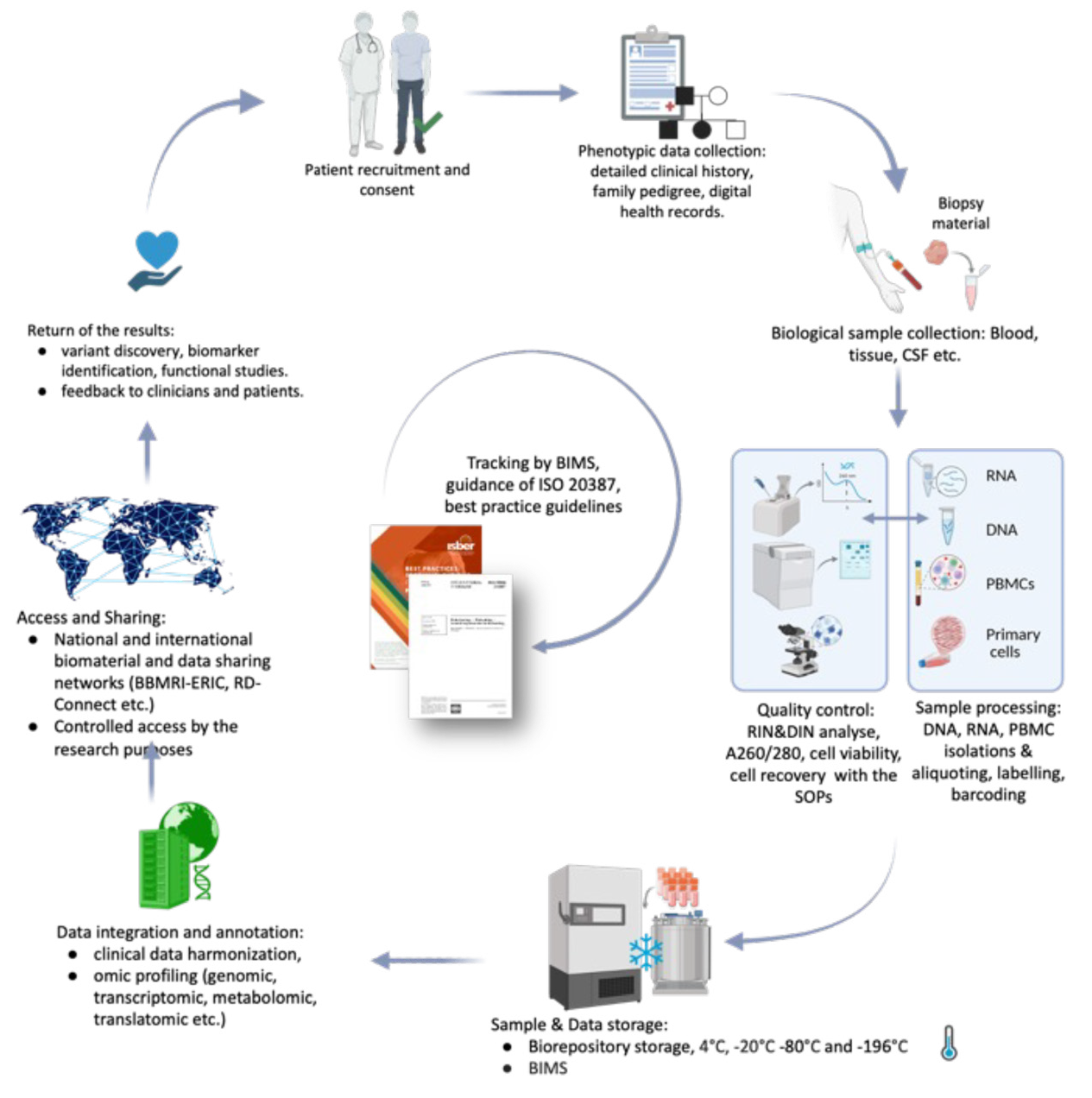
BBMRI-ERIC: Biobanking and Biomolecular Resources Research Infrastructure – European Research Infrastructure Consortium, BIMS: Biobank Information Management System, CSF: Cerebrospinal fluid, DIN: DNA integrity number, DNA: Deoxyribonucleic acid, ISO 20387: International Organization for Standardization 20387, PBMCs: Peripheral blood mononuclear cells, RD-Connect: Rare Disease Connect, RIN: RNA integrity number, RNA: Ribonucleic acid, SOPs: Standard operating procedures
Biological samples (e.g., blood, tissue, CSF) are collected and processed for further studies. Quality control measures (e.g., RIN/DIN analysis, cell viability) are conducted according to SOPs. Samples and associated data are stored in biorepositories at various temperatures and tracked via Biobank Information Management Systems in compliance with with ISO 20387:2018 Biotechnology — Biobanking — General requirements for biobanking standard and biobanking best practice guidelines. Due to the heterogeneous nature of RDs, standardization of samples and data collection, as well as processing, is essential for RD biobanking. Integrated data are annotated and harmonized for downstream analysis, including omics profiling. Finally, controlled access is granted for research purposes through national and international networks (e.g., BBMRI-ERIC, RD-Connect), and results such as variant discovery and biomarker identification are shared with clinicians and patients.
Unique Considerations for the RD Biobanks
RD biobanking has several unique features, including operational, ethical, legal, societal, and regulatory aspects. This rarity elevates the scientific importance of each sample, making it valuable and necessitating pre-analytical workflow protocols for collection, processing, storage, and analysis. A multicenter study highlights the critical importance of harmonizing standardized protocols for the collection, processing, and cryopreservation of peripheral blood mononuclear cells across multiple sites in support of large-scale immune phenotyping in neurodevelopmental disorder research.
Equally important, the quality and consistency of biospecimens and associated data are critical in RD research. Harmonized protocols for biospecimen processing and metadata collection are essential to ensure that samples and associated data are both research-ready and comparable across institutions. Consistent protocols for biospecimen handling, data annotation, and metadata capture ensure high data quality and comparability across institutions. They also facilitate data integration, sharing, and secondary use. This, in turn, maximizes the scientific value of biobank collections in the RD research community. In this context, adherence to the FAIR principles, making data and metadata Findable, Accessible, Interoperable, and Reusable, enhances the utility and longevity of collected resources. It also promotes ethical and effective data sharing, thereby supporting reproducibility and collaboration.
In addition to operational and logistical challenges, ethical issues are another defining feature of RD biobanking. Patients with RDs often face lengthy diagnostic journeys and limited treatment options, and some may take a long time to receive a diagnosis. This may make them more willing to participate in research. However, small patient populations also increase the risk of re-identification, even when anonymization protocols are implemented. For this reason, biobanks implement strict ethical regulations, including informed consent procedures and careful management of data sharing and confidentiality.
Moreover, due to the geographically dispersed and low-prevalence nature of RD populations, international collaboration is often indispensable. No single biobank or country is likely to possess a sufficient number of samples to support statistically robust research. Collaborative infrastructures such as BBMRI-ERIC and global initiatives like RD-Connect and the International RDs Research Consortium (IRDiRC) exemplify the transformative potential of coordinated efforts., These platforms facilitate data sharing, ensure interoperability, and promote the harmonization of biobanking practices, elements that are crucial for accelerating research and advancing therapeutic development in the field of RDs.
Key Contributions of Biobanks to RD Research
Biobanks play a central role in advancing RD research by sharing standardized, high-quality samples and data collections that comply with ethical and legal regulations to enable large-scale studies. The contribution of biobanks in RD research is summarized as (i) facilitating the identification of disease-causing genes and variants, (ii) supporting genomic and multi-omics research to gain insights into disease mechanisms, and (iii) enabling precision medicine and drug discovery efforts ().
Table 1. Key contributions of biobanks to rare disease research
Contribution area | Description | Example/application |
|---|---|---|
Genetic variant identification | Enables the discovery of disease-causing genes and mutations | The identification of 420 RDs and their prevalence was analyzed in 23,575 individuals by using data from the UK Biobank |
Pathophysiological insights | Supports-omics studies to understand disease mechanisms | Image and genomic data from the UK Biobank have been analyzed to generate novel insights into rare ocular diseases |
Therapeutic development | Provides biospecimens for target validation and drug screening | The 145 genes were associated with specific diseases and identified as potential therapeutic targets |
Improved diagnostics | Facilitates biomarker identification and validation | A six-gene immune-related prognostic index was identified and validated as a biomarker for predicting prognosis and immunotherapy response in hepatocellular carcinoma |
Longitudinal cohort studies | Enables longitudinal sample and data collection | RD-Connect linked biobanks facilitated progression studies in Duchenne muscular dystrophy |
Patient stratification | Helps define subtypes and treatment-responsive groups | Genotype-phenotype correlation in rare coding variants related to Childhood Asthma |
Collaboration & standardization | Support international research through the systematic processing of samples and data | A rare missense variant in MYBPC3 was found to be associated with a significant, 3-fold increase in risk for coagulation defects, |
In this regard, extensive cohorts in Biobanks contribute to the development and validation of diagnostic biomarkers, particularly metabolic signatures, as well as diagnostic algorithms and artificial intelligence (AI) models. In addition, biobanks create a platform to re-analyze the sample-associated data, such as whole-genome/exome sequencing, transcriptomics, proteomics, and metabolomics, with state-of-the-art technologies. For example, in a study conducted using optical coherence tomography images and genomic data from the UK Biobank, researchers identified 111 genetic loci and 10 genes associated with photoreceptor cell layer thickness, some of which are linked to rare eye diseases. A notable example of how biobank data can uncover rare variant associations is the study by Liu and Curtis,who analyzed rare loss-of-function and nonsynonymous variants in 470,000 UK Biobank participants and identified three genes, FLG, IL33, and PRKCQ, as significantly associated with childhood asthma risk. Damaging variants in FLG and IL33 were associated with an increased risk, while those in PRKCQ appeared protective. These findings demonstrate that large-scale exome sequencing can identify rare coding variants with significant effects on disease susceptibility. This approach provides a valuable framework for advancing RD research by revealing key genetic drivers and underlying pathogenic mechanisms. The storage of longitudinal samples and clinical data across multiple visits with the same high-quality measures enables researchers to investigate disease progression, assess phenotypic variability, and identify potential modifier genes.
Beyond diagnostics, biobank-derived samples and data play a crucial role in advancing therapeutic research for rare and/or undiagnosed diseases. These biological resources allow i) targeted discovery and pathway analysis by supporting the identification of disease-specific therapeutic targets; ii) the development and optimization of treatment strategies, including enzyme replacement therapies, gene therapies, small-molecule drugs, and substrate reduction therapies; and iii) targeted drug screening with patient-derived cell models.
Overall, the multinational/multicenter studies using a standardized biobanking strategy are advancing RD research and innovation.
Global Initiatives and Best Practices
Globally and nationally coordinated efforts, as well as robust biobanking infrastructures to systematically collect, manage, and share biological samples and associated data, are needed to develop new diagnostic and therapeutic strategies for RDs. To address the challenges posed by rarity and heterogeneity, these infrastructures promote collaboration and develop tools to ensure that data and samples are FAIR. Organizations and initiatives like BBMRI-ERIC, RD-Connect, Orphanet, and EUROSDIS are the key drivers in promoting standardization, collaboration, and accessibility.
BBMRI-ERIC provides a science-based, service-oriented infrastructure across Europe. It supports sample access, legal-ethical consulting, and centralized biobank directories to promote equal access.
RD-Connect, launched under the IRDiRC, integrates genomic data with patient registries, biobanks, and clinical bioinformatics tools. RD-Connect provides researchers with access to harmonized data through Human Phenotype Ontology-based phenotyping and data integration with the European Genome-Phenome Archive, thereby accelerating research collaborations.
Orphanet is a multilingual portal that offers information on RDs and orphan drugs. Its OrphaCode classification standardizes disease coding, facilitating data harmonization and inter-institutional and multidisciplinary collaboration. Through its Orphan Drug Database, it also provides detailed updates on therapies under development or in use. RDs Europe, in collaboration with the Association Française contre les Myopathies, played a key role in establishing the RDs network, Europe’s first virtual biobank platform. This platform promotes international access to high-quality biospecimens and associated data, fosters education, and aligns biobanking practices with patient rights and ethical standards.
To ensure compatibility and high quality across global efforts, standardization frameworks are essential. Minimum Information About Biobank Data Sharing improves data interoperability across biobanks. The International Society for Biological and Environmental Repositories (ISBER) provides best-practice guidelines and tools, such as the Self-Assessment Tool, for operational and ethical quality.
Finally, ISO 20387—Biotechnology—Biobanking—General Requirements for Biobanks, published by the International Organization for Standardization (ISO) in 2018, outlines the requirements for quality management throughout the biological sample lifecycle, from collection to distribution. It mandates traceability, ethical compliance, and continuous quality improvement via SOPs, ensuring the reproducibility and reliability of scientific research.
These global and national initiatives collectively form the backbone of modern, harmonized, and ethical biobanking practices, which are essential for advancing RD research.
Current Challenges and Gaps in Biobanking for RDs
As outlined throughout this review, the advancement of biobanking has created invaluable opportunities for research on rare and/or undiagnosed diseases, facilitating rapid diagnosis, enhancing understanding of pathophysiology, and enabling the development of personalized treatment strategies. However, several challenges, including sustainability, data harmonization, underrepresentation of diverse populations, limited integration with healthcare systems, and regulatory complexities, such as compliance with the General Data Protection Regulation, need to be overcome. In addition, technical, ethical, and legal barriers to translating high-throughput data into clinical practicefurther hinder progress. Addressing these gaps is necessary to ensure that biobanks fully support innovation in RD research. The key challenges and suggested strategies in the current literature to overcome them are summarized in .
Table 2. Key challenges and potential solutions in biobanking for rare disease research
Challenge/gap | Description | Potential solutions |
|---|---|---|
Sustainability and funding models | Long-term financial support is often lacking for biobank maintenance | Develop public-private partnerships, integrate biobanks into national health research strategies, and establish sustainable funding frameworks |
Harmonization of data formats and ontologies | Data inconsistency hinders interoperability across biobanks | Promote the adoption of international standards (e.g., MIABIS, FAIR) and invest in harmonization tools and training |
Underrepresentation | Some ethnic and geographic groups are underrepresented in biobank datasets | Encourage inclusive sampling strategies, support community engagement, and foster global collaborations |
Limited awareness and integration in healthcare systems | Biobanks are often disconnected from clinical workflows | Raise awareness among healthcare professionals, integrate biobanks with electronic health records, and promote translational research links |
Compliance with GDPR and ethical regulations | Strict data protection laws may limit data sharing, especially across international borders | Develop robust, informed consent procedures, implement anonymization/pseudonymization techniques, and establish clear data governance frameworks |
Lack of risk management strategies | The absence of structured risk mitigation plans can expose biobanks to operational, legal, or reputational threats | Establish risk assessment frameworks, implement ISO-aligned quality management systems (e.g., ISO 20387), and conduct regular audits and contingency planning |
Data accessibility and sharing barriers | Institutional and technical barriers limit the flow of data between systems | Establish trusted data-sharing frameworks, APIs, and federated data models |
Low data quality and inconsistent collection methods | Poor-quality or incomplete data reduce the usability of research | Standardize data collection protocols and implement quality control mechanisms |
Lack of FAIR compliance | Data often fail to meet FAIR principles, limiting its reuse | Develop FAIR-enabling infrastructures, such as metadata standards and open data tools |
The legal uncertainty surrounding data ownership and reuse | Uncertainty about who owns or controls the data limits reuse and collaboration | Clarify data ownership in policies, use standardized data use agreements, and promote transparent governance models |
Technical, ethical, and legal barriers in integrating omics into practice | Omics data are challenging to standardize, interpret, and implement due to complex legal and technical constraints | Develop ethical frameworks, invest in omics education, utilize AI tools for data analysis, and revise regulatory guidelines to support clinical translation |
FAIR: Findable, Accessible, Interoperable, Reusable, GDPR: General Data Protection Regulation, MIABIS: Minimum Information About Biobank Data Sharing
ISO 20387: International Standardization Organization 20387
Briefly, key aspects for success include encouraging contributions from experts across different countries and disciplines to ensure the applicability of the main principles, technical requirements, and incentive mechanisms.
Beyond establishing technical frameworks, it is essential to raise awareness and foster the willingness of researchers, healthcare professionals, and the public to engage in biobanking through education, training, and extracurricular activities. Additionally, ensuring biobank sustainability requires business planning, operational standardization, and accreditation, stakeholder engagement, and interoperability.
Building trust among participants, clinicians, and researchers is also crucial for enhancing research impact and maximizing the overall value of biobanking efforts.
Failed Efforts and Controversies
Despite the growing recognition of their importance, RD biobanks have faced failed efforts and unresolved controversies that limit their effectiveness. Attempts to promote international access and collaboration have frequently fallen short due to researchers’ reluctance to share samples, clinicians’ protection of their own collections, and complex legal and ethical differences that hinder cross-border cooperation.- Similarly, while organisations such as ISBER and BBMRI-ERIC have issued harmonisation guidelines, the persistence of variable procedures and quality standards across biobanks demonstrates the incomplete success of standardisation efforts, undermining sample comparability and research reproducibility., In the area of public trust, debates continue regarding the impact of commercialisation, cross-border data sharing, and global networking, which in some contexts have made biobanks appear less transparent or even exploitative., Ethical disputes also remain unresolved. Informed consent models continue to provoke controversy, as broad and dynamic consent have not gained universal acceptance. Moreover, issues such as re-consent for adolescents, incidental findings, and the right not to know underline the ethical fragility of current frameworks., Finally, sustainability failures are evident in case studies where limited government and clinician support, coupled with poor awareness of rare diseases, have led to obstacles in biobank development, and no long-term funding or strategic planning mechanisms were established to ensure their continued operation., Together, these examples illustrate that RD biobanking is not only marked by success stories but also by incomplete initiatives and unresolved controversies that continue to challenge its global integration.
Future Perspectives
With the rapid evolution of -omics technologies and digital health, biobanking is undergoing a paradigm shift, particularly in the field of RDs, where innovation is not only beneficial but also necessary. The evolving landscape of biobanking needs significant transformations driven by technological advancements and shifting ethical paradigms. Particularly in the context of RDs, key emerging trends include i) the use of AI, machine learning (ML), deep learning (DL), and big data analytics; ii) federated data sharing models; iii) expansion of longitudinal and real-world data biobanks; iv) promoting patient-centric biobanking; and v) dynamic consent models.
AI and ML provide powerful tools for extracting insights from complex, high-dimensional datasets characteristic of RD research. By integrating multi-omics data (genomics, proteomics, and metabolomics) with clinical and phenotypic information, AI can facilitate pattern recognition, biomarker discovery, and prediction of disease progression in RDs. A DL–based algorithm using convolutional neural networks has been trained on cardiac magnetic resonance imaging data from biobank-derived Fabry disease and hypertrophic cardiomyopathy patients to distinguish between these conditions, achieving high accuracy (area under the curve≈0.918) in an external single-blind validation study. The same method also automates volumetric assessment of left ventricular function more precisely and more quickly than human experts, aiding in disease monitoring and clinical trial selection. AI-powered algorithms, with the help of ML/DL, can also optimize biospecimen management, improve quality control, and support decision-making in the operations of RD biobanks.,
As AI continues to revolutionize the interpretation of complex biomedical data, ensuring secure and scalable access to that data becomes equally critical. This is where federated data-sharing models come into play. Rather than centralizing sensitive information, federated models enable secure analysis across distributed datasets, effectively preserving privacy while facilitating large-scale research., A disease-specific federated data network enables RD research institutions to retain local control over sensitive patient-level data, thereby enhancing privacy, governance, and transparency, while allowing for harmonized distributed analysis, as seen in the Haematology Outcomes Network in Europe for multiple myeloma and the Federation of Pulmonary Hypertension. These federated networks leverage common data models and strong governance frameworks to conduct collaborative real-world evidence studies across disparate data sources. In RD research, these models are particularly valuable, allowing investigators to overcome data silos, enhance statistical power, and foster international collaboration, all while respecting local governance and data protection regulations.
In the context of RDs, diagnosis often takes time, symptoms vary, and data on disease history are limited. Longitudinal and real-world data biobanks help track disease progression, find useful biomarkers, and support the use of research in clinical care., The Systemic Lupus Erythematosus (SLE) International Collaborating Clinics biobank tracks over 1,800 SLE patients with more than 1,300 DNA samples and over 9,600 serum/plasma specimens spanning more than a decade of follow-up, enabling comprehensive longitudinal biomarker discovery and natural history studies in this rare autoimmune disease.
Patient-centric biobanking in RDs emphasizes the active involvement of patients and advocacy groups in governance, consent processes, and priority-setting to ensure that research aligns with patient needs and values. This approach fosters transparency, trust, and sustained engagement, which are particularly critical in RD communities where patient participation often drives research progress. The Telethon Network of Genetic Biobanks exemplifies this model by integrating patient organizations into advisory roles and policy development, including the drafting of ethical guidelines through dedicated meetings and representation on the advisory board, resulting in formal agreements that centralize RD biospecimens and data while strengthening collaboration.
Dynamic consent models enable ongoing, two-way communication between participants and biobanks, allowing individuals to modify their consent preferences over time. This approach enhances transparency, trust, and engagement, which are crucial factors in RD communities where patients often play a central role in research advocacy. Furthermore, involving patients in biobank governance and research prioritization can help align scientific goals with real-world needs. The Rare UK Diseases of Bone, Joints, and Blood Vessels study is a pioneering initiative that employs digital technologies to create a patient-driven research platform for individuals with rare musculoskeletal diseases. Central to its design is a dynamic consent model, allowing participants to manage their consent preferences over time, thereby enhancing patient autonomy and engagement. The study integrates patient organizations into all stages of development, from study design to data governance, ensuring that research aligns with patient priorities and needs.
CONCLUSION
Biobanks have emerged as indispensable infrastructures in the landscape of RD research, addressing many of the field’s inherent challenges, such as limited patient cohorts, diagnostic delays, and a lack of standardized biological data. By enabling the systematic collection, processing, and sharing of high-quality biospecimens and associated multi-omics and clinical data, biobanks provide a robust foundation for uncovering mechanisms, discovering novel biomarkers, and advancing personalized therapies.
Despite their transformative potential, RD biobanks still face significant challenges, including sustainability, data harmonization, underrepresentation of diverse populations, and complexities in legal and ethical considerations. However, global collaborations, the implementation of standardized biobanking procedures, and technological advancements offer promising solutions. In particular, patient-centric models and dynamic consent frameworks are transforming the way trust, autonomy, and participation are negotiated within research ecosystems.
Altogether, to fully unlock the potential of biobanking in addressing RDs, it is essential to strategically coordinate the efforts of stakeholders, researchers, clinicians, patients, policymakers, and funders. This collaboration is crucial for accelerating advancements in early diagnosis and effective treatment, and ultimately improving the lives of those affected by RDs.
Footnotes
Acknowledgements
We acknowledge the support of the Rareboost project, funded by the European Union’s Horizon 2020 research and innovation program under the ERA Chairs scheme (grant agreement no. 952346).
Authorship Contributions
Concept: S.T.A., N.A., Design: S.T.A., N.A., Literature Search: S.T.A., Ç.Ç., B.Ö., U.Ö., N.A., Writing: S.T.A., Ç.Ç., B.Ö., N.A.
Conflict of Interest: The authors have no conflicts of interest to declare.
Financial Disclosure: This work was supported by İzmir Biomedicine and Genome Center infrastructure and Biobank and Biomolecular Resources Platform.
References
Adachi T, El-Hattab AW, Jain R, Nogales Crespo KA, Quirland Lazo CI, Scarpa M, Summar M, Wattanasirichaigoon D. Enhancing equitable access to rare disease diagnosis and treatment around the world: a review of evidence, policies, and challenges. Int J Environ Res Public Health. 2023;20(6):4732.
What is a rare disease? EURORDIS-Rare Diseases Europe. Accessed May 24, 2025. https://www.eurordis.org/information-support/what-is-a-rare-disease/
Baldacci S, Santoro M, Pierini A, Mezzasalma L, Gorini F, Coi A. Healthcare burden of rare diseases: a population-based study in Tuscany (Italy). Int J Environ Res Public Health. 2022;19(13):7553.
Wang Z, Zhang C, Zhang X, Bian Y, Cao Y. Assessing the impact of long-term storage on the quality and integrity of biological specimens in a reproductive biobank. Bioeng Transl Med. 2024;9(6):e10692.
Willmen L, Völkel L, Willmen T, Deckersbach T, Geyer S, Wagner AD. The economic burden of diagnostic uncertainty on rare disease patients. BMC Health Serv Res. 2024;24(1):1388.
Buckle N, Doyle O, Kodate N, Kinch M, Somanadhan S. Caregiver-reported economic ımpacts of pediatric rare diseases—a scoping review. Healthcare. 2024;12(24):2578.
Durmus S, Yucesan E, Aktug S, Utz B, Caglayan AO, Gencpinar P, Günay C, Oktay Y, Yildirim RN, Yigit A, Ozbek U. Management of rare and undiagnosed diseases: insights from researchers and healthcare professionals in Türkiye. Front Public Health. 2025;12:1501942.
Malsagova K, Kopylov A, Stepanov A, Butkova T, Sinitsyna A, Izotov A, Kaysheva A. Biobanks—a platform for scientific and biomedical research. Diagnostics. 2020;10(7):485.
Kinkorová J. Biobanks in the era of personalized medicine: objectives, challenges, and innovation: Overview. EPMA J. 2015;7(1):4.
Garcia M, Downs J, Russell A, Wang W. Impact of biobanks on research outcomes in rare diseases: a systematic review. Orphanet J Rare Dis. 2018;13(1):202.
Coppola L, Cianflone A, Grimaldi AM, Incoronato M, Bevilacqua P, Messina F, Baselice S, Soricelli A, Mirabelli P, Salvatore M. Biobanking in health care: evolution and future directions. J Transl Med. 2019;17(1):172.
Paskal W, Paskal AM, Dębski T, Gryziak M, Jaworowski J. Aspects of modern biobank activity – comprehensive review. Pathol Oncol Res. 2018;24(4):771-785.
Taruscio D, Gahl WA. Rare diseases: challenges and opportunities for research and public health. Nat Rev Dis Primer. 2024;10(1):13.
Gunes D, Karaca M, Durmus A, Ak B, Aktay Ayaz N, Altınel ZU, Aslanger AD, Atalar F, Balci MC, Bilgin L, Darendeliler F, Demirkol D, Durmaz O, Gedikbasi A, Inan Balci E, Ince EZ, Karadag SG, Keskindemirci G, Nisli K, Ozcetin M, Somer A, Unuvar A, Uysalol M, Yildiz E, Yuruk Yildirim ZN, Demirkol M, Gokcay GF. Challenges in the clinical management of rare diseases and center-based multidisciplinary approach to creating solutions. Eur J Pediatr. 2025;184(5):281.
Fehr A, Prütz F. Rare diseases: a challenge for medicine and public health. Robert Koch-Institut. Preprint posted online December 13, 2023.
Gittus M, Chong J, Sutton A, Ong ACM, Fotheringham J. Barriers and facilitators to the implementation of guidelines in rare diseases: a systematic review. Orphanet J Rare Dis. 2023;18(1):140.
Burton A, Castaño A, Bruno M, Riley S, Schumacher J, Sultan MB, See Tai S, Judge DP, Patel JK, Kelly JW. Drug discovery and development in rare diseases: taking a closer look at the Tafamidis story. Drug Des Devel Ther. 2021;15:1225-1243.
Annaratone L, De Palma G, Bonizzi G, Sapino A, Botti G, Berrino E, Mannelli C, Arcella P, Di Martino S, Steffan A, Daidone MG, Canzonieri V, Parodi B, Paradiso AV, Barberis M, Marchiò C; Alleanza Contro il Cancro (ACC) Pathology and Biobanking Working Group. Basic principles of biobanking: from biological samples to precision medicine for patients. Virchows Arch. 2021;479(2):233-246.
De Souza YG, Greenspan JS. Biobanking past, present and future: responsibilities and benefits. AIDS. 2013;27(3):303-312.
Korhan P, Tercan Avcı S, Yılmaz Y, Öztemur Islakoğlu Y, Atabey N. Role of biobanks for cancer research and precision medicine in hepatocellular carcinoma. J Gastrointest Cancer. 2021;52(4):1232-1247.
Olson JE, Bielinski SJ, Ryu E, Winkler EM, Takahashi PY, Pathak J, Cerhan JR. Biobanks and personalized medicine. Clin Genet. 2014;86(1):50-55.
Valenti A, Falcone I, Valenti F, Ricciardi E, Di Martino S, Maccallini MT, Cerro M, Desiderio F, Miseo L, Russillo M, Guerrisi A. Biobanks as an indispensable tool in the “Era” of precision medicine: key role in the management of complex diseases, such as melanoma. J Pers Med. 2024;14(7):731.
Rehm HL. Building biobanks to drive biomedical research and genomically informed care. JAMA Netw Open. 2025;8(3):e250925.
Kinkorová J, Topolčan O, Kučera R. Informed consent in the newly established biobank. Int J Environ Res Public Health. 2019;16(20):3943.
van der Velden FJS, Lim E, Gills L, Broadey J, Hayes L, Roberts E, Courtney J, Ball J, Herberg J, Galassini R, Emonts M; DIAMONDS consortium. Biobanking and consenting to research: a qualitative thematic analysis of young people’s perspectives in the North East of England. BMC Med Ethics. 2023;24(1):47.
Pellico MR, Day J, Shah M, Yi BY, Saketkoo LA, Lood C, Gupta L. Biorepositories for global rare disease research: a narrative review. Curr Rheumatol Rep. 2025;27(1):24.
Cleary S, Teskey G, Mathews C, Crook T, Kaplan AS, Tjernagel K, Gauthier J, Miller M, Hallmayer J, Korvatska E, Bernier R, Vorstman JAS. Assessment of a multisite standardized biospecimen collection protocol for immune phenotyping in neurodevelopmental disorders. Sci Rep. 2023;13(1):6971.
Inau ET, Sack J, Waltemath D, Zeleke AA. Initiatives, concepts, and ımplementation practices of the findable, accessible, ınteroperable, and reusable data principles in health data stewardship: scoping review. J Med Internet Res. 2023;25:e45013.
International Society for Biological and Environmental Repositories (ISBER). Best Practices: Recommendations for Repositories. 5th ed. ISBER; 2018.
Van Karnebeek CDM, O’Donnell-Luria AH, Baynam G, Taruscio D, Groft SC, Austin CP, Boycott KM, Dawkins HJS, Wangler MF, Brownstein CA, Palmer EE, Ellaway C, Bonham J, Adams DR, Ng D, Wright CF, Smedley D, Rehm HL. Leaving no patient behind! Expert recommendation in the use of innovative technologies for diagnosing rare diseases. Orphanet J Rare Dis. 2024;19(1):357.
Thompson R, Johnston L, Taruscio D, Monaco L, Béroud C, Mabile L, Shoenmaker J, Cederroth H, Kauffmann F, Hansson MG, Ouillade MC, Posada M, Dawkins H, Lochmüller H. RD-Connect: an ıntegrated platform connecting databases, registries, biobanks and clinical bioinformatics for rare disease research. J Gen Intern Med. 2014;29(Suppl 3):780-787.
You P, Liu X, Wang M, Zhan Y, Chen L, Chen Y. Development and validation of an immune-related gene-based model for predicting prognosis and immunotherapy outcomes in hepatocellular carcinoma patients. Sci Rep. 2025;15(1):6618.
Wojtara M, Rana E, Rahman T, Khanna P, Singh H. Artificial intelligence in rare disease diagnosis and treatment. Clin Transl Sci. 2023;16(11):2106-2111.
Currant H, Fitzgerald TW, Patel PJ, Chua SYL, Marshall H, Pontikos N, Llorente B, Zhao W, Wang W, Petkova M, Carss K, Xie J, Liu Y, Wang Z, Iyengar SK. Sub-cellular level resolution of common genetic variation in the photoreceptor layer identifies continuum between rare disease and common variation. PLOS Genet. 2023;19(2):e1010587.
Liu Z, Curtis D. Analysis of rare coding variants in 470,000 UK biobank participants reveals genetic associations with childhood asthma predisposition. Int J Immunogenet. Published online May 8, 2025: iji.12714.
Patrick MT, Bardhi R, Zhou W, Elder JT, Gudjonsson JE, Tsoi LC. Enhanced rare disease mapping for phenome-wide genetic association in the UK Biobank. Genome Med. 2022;14(1):85.
Ferolito BR, Dashti H, Giambartolomei C, Jiang L, Takeuchi F, Yengo L, Liao C, Bulik-Sullivan BK, Okada Y, Martin AR. Leveraging large-scale biobanks for therapeutic target discovery. Preprint posted online February 12, 2025.
Gallagher CS, Ginsburg GS, Musick A. Biobanking with genetics shapes precision medicine and global health. Nat Rev Genet. 2025;26(3):191-202.
Sun BB, Kurki MI, Foley CN, Mechakra A, Chen CY, Marshall E, Wilk JB; Biogen Biobank Team; Chahine M, Chevalier P, Christé G; FinnGen; Palotie A, Daly MJ, Runz H. Genetic associations of protein-coding variants in human disease. Nature. 2022;603(7899):95-102.
Bruce IA, Ezgü FS, Kampmann C, Beck M, Giugliani R, Jones SA, Ketteridge D, Link B, Parini R, Reuser AJJ, Scarpa M, Valayannopoulos V, Harmatz P. Addressing the need for patient-friendly medical communications: adaptation of the 2019 recommendations for the management of MPS VI and MPS IVA. Orphanet J Rare Dis. 2022;17(1):91.
Reihs R, Proynova R, Maqsood S, Stocker G, Mayrhofer MT, Jagodnik KM, Holub P, Norlin L, Piret C, Cederroth H, van Enckevort D, Licher K, Schueller C, Litton JE. BBMRI-ERIC negotiator: ımplementing efficient access to biobanks. Biopreserv Biobank. 2021;19(5):414-421.
Lochmüller H, Badowska DM, Thompson R, Knoers NVAM, Aartsma-Rus A, Gut I, Wood L, Harmuth T, Durudas A, Graessner H, Johnston J, Ferlini A, Straub V, Schwartz O. RD-Connect, NeurOmics and EURenOmics: collaborative European initiative for rare diseases. Eur J Hum Genet. 2018;26(6):778-785.
Rath A, Olry A, Dhombres F, Brandt MM, Urbero B, Ayme S. Representation of rare diseases in health information systems: The Orphanet approach to serve a wide range of end users. Hum Mutat. 2012;33(5):803-808.
Mora M, Angelini C, Bignami F, Bodin AM, Crimi M, Di Donato JH, Hollak C, Moraes CT, Noakes PG, Santorelli FM, van der Spek PJ, Tavazzi E, Thonhofer M, Lochmüller H. The EuroBioBank Network: 10 years of hands-on experience of collaborative, transnational biobanking for rare diseases. Eur J Hum Genet. 2015;23(9):1116-1123.
Lochmüller H, Schneiderat P. Biobanking in Rare Disorders. In: Posada De La Paz M, Groft SC, eds. Rare Diseases Epidemiology. Vol 686. Springer Netherlands; 2010:105-113.
Norlin L, Fransson MN, Eriksson M, Kurtovic S, Anderberg M, Bruland T, Hansson MG, Litton JE, Merino-Martinez R. A minimum data set for sharing biobank samples, ınformation, and data: MIABIS. Biopreserv Biobank. 2012;10(4):343-348.
Gao D, Grossman G. ISBER corner: ISBER marching forward: a 25-year journey. Biopreserv Biobank. 2024;22(6):628-630.
International Organization for Standardization (ISO). ISO 20387:2018. Biotechnology — biobanking — general requirements for biobanking. Published August 2018. Available from: https://www.iso.org/standard/67888.html
Abdaljaleel M, Singer EJ, Yong WH. Sustainability in Biobanking. In: Yong WH, ed. Biobanking. Vol 1897. Springer New York; 2019:1-6.
Karataş M, Azbazdar ME, Camkiranlar M, Tercan-Avci S, Atabey N. Biobank education for future physicians: training medical students through student research association networks. Biopreserv Biobank. 2024;22(3):217-224.
Simeon-Dubach D, Kozlakidis Z, Tayal J, Verheij E, Lolkema MP, Silva J, Holub P. Experts speak forum: implementation of the FAIR principles in biobanking needs fair incentives. Biopreserv Biobank. 2024;22(6):557-562.
Edworthy E. Communitarian ethics perspective on UK biobanking: the Newborn Genomes Programme. J Med Ethics. Published online May 11, 2025:jme-2025-110846.
Venturini P, Faria PL, Cordeiro JV. AI and omics technologies in biobanking: Applications and challenges for public health. Public Health. 2025;243:105726.
Fortin S, Pathmasiri S, Grintuch R, Deschênes M. “Access arrangements” for biobanks: a fine line between facilitating and hindering collaboration. Public Health Genomics. 2011;14(2):104-114.
Colledge F, Elger B, Howard HC. A review of the barriers to sharing in biobanking. Biopreserv Biobank. 2013;11(6):339-346.
Monaco L, Crimi M, Wang CM. The challenge for a European network of biobanks for rare diseases taken up by RD-Connect. Pathobiology. 2014;81(5-6):231-236.
Tada M, Hirata M, Sasaki M, Mochizuki T, Nakamura Y, Shimizu R, Okazaki Y. The rare disease bank of Japan: establishment, current status and future challenges. Hum Cell. 2018;31(3):183-188.
Borisova AL, Pokrovskaya MS, Meshkov AN, Metelskaya VA, Shatalova AM, Drapkina OM. ISO 20387 biobanking standard: Analysis of requirements and experience of implementation. Klin Lab Diagn. 2020;65(9):587-592.
Dive L, Critchley C, Otlowski M, Skene L, Slokenberga S, Bialobrzeski A, Kaye J. Public trust and global biobank networks. BMC Med Ethics. 2020;21(1):73.
Moodley K, Singh S. “It’s all about trust”: reflections of researchers on the complexity and controversy surrounding biobanking in South Africa. BMC Med Ethics. 2016;17(1):57.
Sadzevičius M, Mizeikis L. Biobanks – legal regulation and ethical challenges. Vilnius Univ Open Ser. Published online October 24, 2024:58-78.
Van Der Velden FJS, Lim E, Gills L, Gill S, McKenzie G, Phelan J, McCarthy M, Pearce MS, Parker M. Biobanking and consenting to research: a qualitative thematic analysis of young people’s perspectives in the North East of England. BMC Med Ethics. 2023;24(1):47.
Conradie EH, Malherbe H, Hendriksz CJ, Dercksen M, Vorster BC. An overview of benefits and challenges of rare disease biobanking in Africa, focusing on South Africa. Biopreserv Biobank. 2021;19(2):143-150.
Nishat SMH, Shahid Tanweer A, Alshamsi B, Alhammadi M, Ahmed M, Alkaabi N, Alnuaimi N, Alzubaidi R, Altaf T, Murtaza G, Kumar A. Artificial intelligence: a new frontier in rare disease early diagnosis. Cureus. Published online February 22, 2025.
Germain DP, Gruson D, Malcles M, Garcelon N. Applying artificial intelligence to rare diseases: a literature review highlighting lessons from Fabry disease. Orphanet J Rare Dis. 2025;20(1):186.
Cho H, Froelicher D, Chen J, Jaggi M, Soria-Comas J, Kim M, Aslett L, Demirci H, Raghunathan A, Shokri R, Papadimitriou S, Alvim-Gaston M, Lambert SA, Beaulieu-Jones BK. Secure and federated genome-wide association studies for biobank-scale datasets. Nat Genet. 2025;57(4):809-814.
Rehm HL, Page AJH, Smith L, Adams JB, Alterovitz G, Babb LJ, Baldridge D, Chasioti D, Church G, Crawford J, Deans Z, Glazer AM, Hansen D, et al. GA4GH: International policies and standards for data sharing across genomic research and healthcare. Cell Genomics. 2021;1(2):100029.
Van Baalen V, Didden E, Rosenberg D, Bardenheuer K, Van Speybroeck M, Brand M. Increase transparency and reproducibility of real‐world evidence in rare diseases through disease‐specific Federated Data Networks. Pharmacoepidemiol Drug Saf. 2024;33(4):e5778.
Baldo C, Casareto L, Renieri A, Brusco A, Cereda A, Ferlini A, Garavaglia B, Giardino D, Malcovati M, Mottini M, Rizzuti T, Sangiuolo F, Zuffardi O, Taruscio D. The alliance between genetic biobanks and patient organisations: the experience of the Telethon Network of Genetic Biobanks. Orphanet J Rare Dis. 2016;11(1):142.
Bruns A, Winkler EC. Dynamic consent: a royal road to research consent? J Med Ethics. Published online July 24, 2024:jme-2024-110153.
Teare HJA, Hogg J, Kaye J, Lucchetti AF, Rush E, Turner A, Wilcox R, Parker M, O’Donovan C, van’t Hoff W, McDonagh JE, Biggs J, Knight J, Williams R, Fairchild P, Bell J. The RUDY study: using digital technologies to enable a research partnership. Eur J Hum Genet. 2017;25(7):816-822.